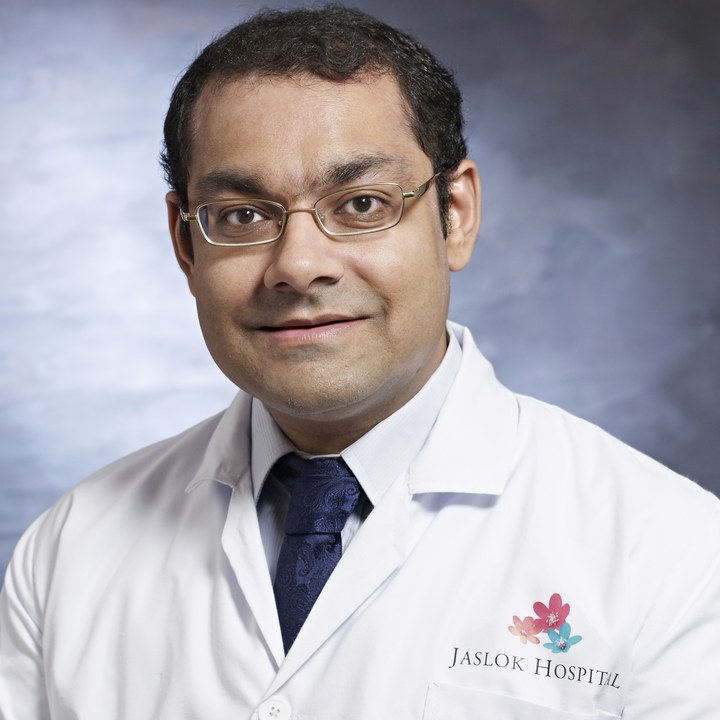
Trained in both routes to the same vessel.
Most surgeons who treat cerebrovascular disease are trained either to operate on the brain or to work inside its arteries through a catheter. Dr. Ambekar completed fellowships in both — skull base and open microsurgery at Louisiana State University in Shreveport, endovascular neurosurgery at the University of Miami — and returned to Mumbai in 2015 to practise them together.
That matters mainly for one reason: the recommendation you receive is not shaped by the only technique available. An aneurysm can be coiled, flow-diverted or clipped; an arteriovenous malformation can be embolised, removed or irradiated. The choice is made on the anatomy in front of us.
He carries each case through personally, from the diagnostic angiogram to the embolisation or operation, and works across aneurysms, arteriovenous malformations and fistulas, chronic subdural haematoma, paediatric vascular disease and acute stroke.
Much of the practice is second opinions — patients told they have an aneurysm and left frightened, or people whose pulsing ear noise or slowly failing legs have been investigated in the wrong direction for years. A useful proportion of those consultations end with the advice to do nothing and watch, which is a legitimate result rather than a wasted visit.
Training
- 2006MBBS — JIPMER, PuducherryGold medals in paediatrics and orthopaedics.
- 2011MCh Neurosurgery — NIMHANS, BengaluruBest outgoing resident.
- 2014Fellowship, skull base surgeryLSU Health Sciences Center, Shreveport, Louisiana, under Prof. Anil Nanda.
- 2015Fellowship, endovascular neurosurgeryUniversity of Miami Miller School of Medicine, under Prof. Roberto Heros.
- 2015 —Consultant practice, MumbaiJaslok Hospital and Lilavati Hospital. International Fellow of the American Association of Neurological Surgeons (IFAANS).
Registration
Maharashtra Medical Council 2017083828