Why it gets missed
The fall that causes it may be trivial and long forgotten. The blood accumulates over weeks, so there is no dramatic moment of change. The family notices that their father has become slower, more confused, unsteady on his feet, perhaps weak down one side, sleeping more. Every one of those changes is easy to attribute to age or to dementia.
The distinction matters enormously, because dementia is not reversible and this is. A plain CT scan of the head settles the question in minutes.
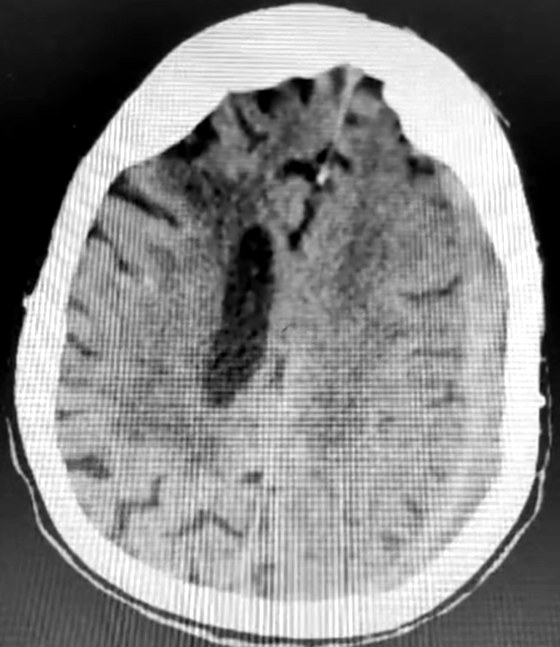
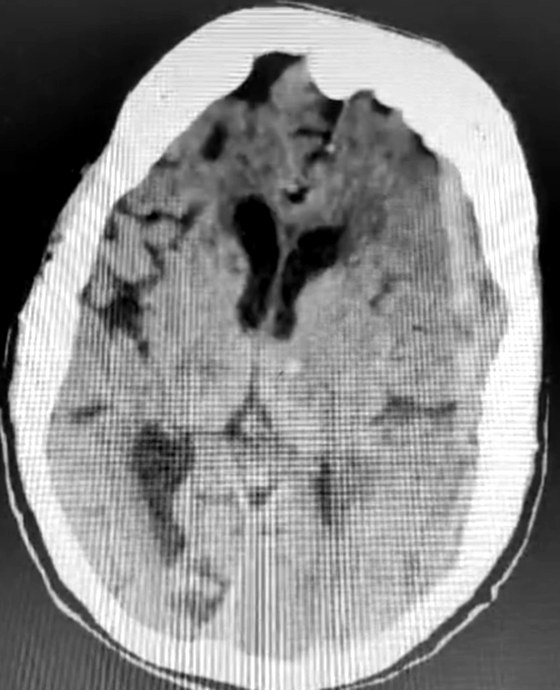
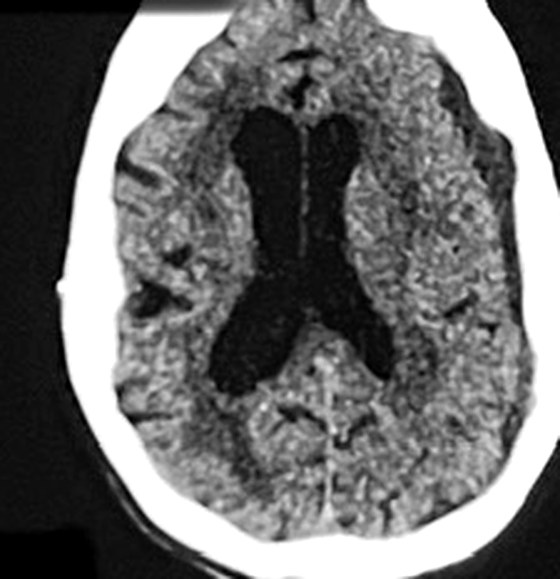
Who is at risk
- Older adults, in whom the brain has shrunk slightly and the bridging veins are more easily torn.
- Anyone taking anticoagulants or antiplatelet medication — a large and growing group.
- People with heavy alcohol use, or with previous brain shrinkage from any cause.
- Patients with a shunt for hydrocephalus.
Treatment
Drainage
Where the collection is large and causing symptoms, it is drained through one or two small holes in the skull, usually under local or general anaesthesia, with a drain left in place for a day or two. Improvement is often rapid and striking — families frequently describe getting the person back.
Middle meningeal artery embolisation
The membranes around a chronic subdural carry fragile new vessels fed by the middle meningeal artery, and these keep leaking, which is why these collections have historically recurred so often. Blocking that artery through a catheter, from the wrist or groin, cuts off the supply. Used alongside drainage it substantially reduces the chance of recurrence, and for smaller collections in patients with mild symptoms it can be the only procedure needed — avoiding an operation altogether in a frail patient.
Watching
Small collections causing no symptoms may simply be observed with repeat scans, particularly if anticoagulation can be adjusted.
Most patients with this condition are on a blood thinner for good reason — a heart valve, atrial fibrillation, a previous clot. Deciding whether to stop it, for how long, and when to restart is often the most consequential part of the treatment, and it is made together with the cardiologist or physician who prescribed it.
What to expect afterwards
Most patients improve within days. Recovery of thinking and steadiness may continue over weeks. A follow-up scan confirms the collection is resolving. Recurrence remains possible, which is why the embolisation has changed practice so much, and why any return of confusion, headache or weakness should prompt a repeat scan rather than a wait.